

By Judy Zhou, Head of Content Strategy
Key Takeaways
- Google holds over 90% of global search market share, but AI answer engines like Perplexity and ChatGPT Search now cite sources using entirely different signals than traditional ranking — making 'search engines besides Google' a strategic question, not just a preference one.
- The arXiv GEO paper by Chen, Wang, Chen, and Koudas found that AI search engines show systematic bias toward editorially earned placements over brand-owned content, meaning third-party citations matter more than homepage authority for AI visibility.
- Perplexity's RAG architecture rewards content with high semantic density, named statistics, FAQ schema, and content freshness — signals that overlap with but are not identical to Google SEO, requiring separate optimization workstreams.
- Bing/Copilot, DuckDuckGo, and Ecosia all run on Bing's index, so a single Bing optimization strategy covers multiple surfaces — while Perplexity, Brave, and DeepSeek require independent monitoring and citation-building efforts.
When your ideal customer types a question into an AI assistant at 11 p.m. and gets a confident, sourced answer. Is your brand one of the sources cited, or are your competitors filling that slot while you wait for a Google ranking that may never deliver the click it used to? The search landscape entering 2026 looks nothing like the one your current strategy was built for. Understanding which engines actually matter beyond Google. And how each one decides what to surface, cite, and recommend. Is no longer optional background knowledge. It is the whole game.
The question "what are search engines besides Google" is being asked by more marketers than ever, but most are still framing it wrong. Google holds over 90% of global search engine market share as of late 2024, according to Statcounter. But that number obscures a structural shift: the search engines gaining ground aren't just taking clicks from Google. They're changing what "search" means entirely. The arXiv GEO paper by Chen, Wang, Chen, and Koudas found that AI search engines show systematic bias toward earned media over brand-owned content. The original Generative Engine Optimization paper on arXiv established that citation patterns in generative engines differ fundamentally from traditional ranking signals. If your AI search visibility strategy is still built around one platform, you're not just missing traffic. You're missing citations, recommendations, and the trust signals that compound over time.
Why 'Besides Google' Is the Wrong Frame in 2026
The framing of "Google alternatives" made sense in 2018. It made sense when the conversation was about privacy (DuckDuckGo), market diversity (Bing), or environmental commitments (Ecosia). Those conversations still exist. But they're not where the real disruption is happening.
The search engines besides Google that actually matter for content visibility in 2026 are AI answer engines. Perplexity, ChatGPT Search, and Bing Copilot don't just return a list of blue links. They synthesize an answer and cite the sources they used. That's a categorically different relationship between your content and your audience. A user who gets a Perplexity answer citing your article didn't "visit" your site in the traditional sense. They received your information, filtered through an AI layer, with your brand name attached. Whether that counts as a win depends entirely on whether the citation drives downstream action.
Here's the contrarian take I'll defend: obsessing over Google's 90% share is the wrong instinct for content strategists right now. Not because that share doesn't matter, but because the marginal return on Google optimization is declining while the marginal return on AI citation optimization is still wide open. The teams I've watched gain ground in 2026 aren't the ones who cracked some new Google algorithm signal. They're the ones who got cited by Perplexity for their topic category before their competitors noticed the channel existed.
That said, I want to be honest about the limits of what we know. I've watched AI citation traffic hit informational pages that never converted. The bottom-of-funnel content that actually drove pipeline was getting no LLM pickup at all. The zero-sum question. Does generative engine optimization cannibalize SEO or complement it. Is still genuinely open. Anyone telling you it's settled is working from a sample too small to mean anything.
The Major Non-Google Search Engines and AI Answer Engines Explained
Here's a grounded breakdown of what's actually worth your attention in 2026, organized by how each engine behaves as a citation source.
Bing / Microsoft Copilot remains the most underestimated engine in this conversation. Bing processes billions of queries monthly and powers Copilot's web grounding. Microsoft's integration of Copilot across Windows, Edge, and Office means Bing's index is the underlying source for a massive volume of AI-assisted answers that users don't even recognize as "Bing." For content teams, this matters: Bing's crawler is active, its structured data processing is solid, and ranking on Bing often correlates with Copilot citation. If you're ignoring Bing because it "only has 3% market share," you're ignoring the engine powering a significant slice of enterprise AI usage.
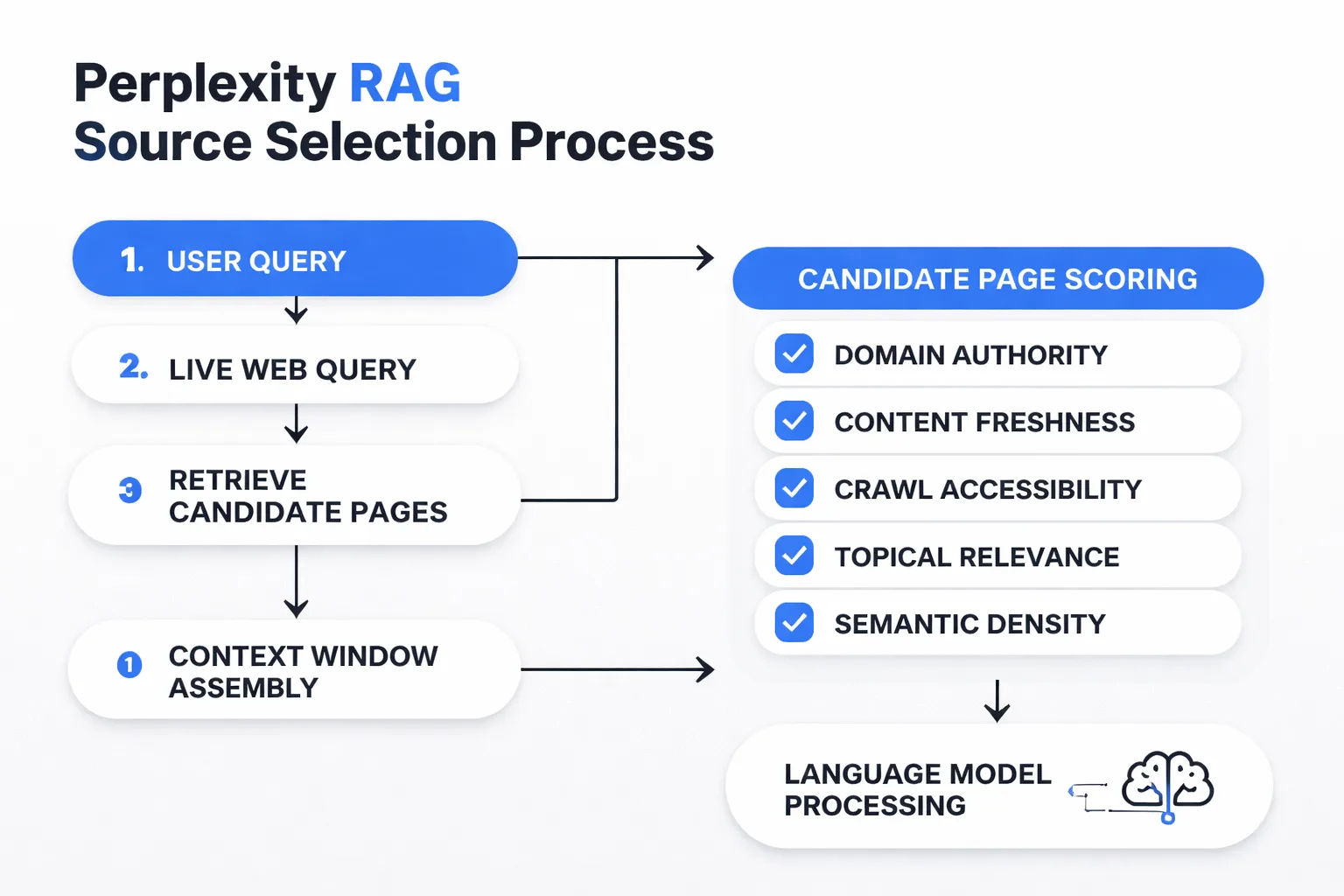
Perplexity is the engine I track most carefully right now, specifically because of how transparent its citation behavior is. Every answer surfaces the sources it pulled from, which means you can study citation patterns directly. Perplexity uses a retrieval-augmented generation (RAG) architecture. It queries the web in real time, retrieves relevant pages, and synthesizes an answer with inline citations. The arXiv paper on GEO by Chen, Wang, Chen, and Koudas found that AI search engines show systematic bias toward editorially earned placements over brand-owned content, which tracks precisely with what I observe in Perplexity's citation behavior. Pages that get cited tend to be third-party references to a brand or topic, not the brand's own homepage.
ChatGPT Search (the browsing-enabled version of ChatGPT) operates differently from Perplexity. It doesn't always surface citations visibly, which makes citation tracking harder. NC State faculty researchers Ning Sui and George Hess noted in their comparative analysis that ChatGPT "needs to be poked multiple times to route to the correct answer" — a signal that its source selection is less deterministic than Perplexity's. For content teams, this means ChatGPT Search rewards content that appears in authoritative third-party contexts, since the model is drawing on its training data plus live retrieval in ways that aren't fully transparent.
DuckDuckGo still matters for a specific audience: privacy-conscious users who actively avoid Google tracking. Its market share is modest but its user intent signal is high. DuckDuckGo now incorporates AI-generated answers (DuckAssist) powered by Bing and Anthropic's Claude. Ranking on Bing effectively gives you coverage on DuckDuckGo as well, which is an efficiency worth knowing.
Brave Search has built its own independent index (not Bing-dependent), which makes it genuinely distinct. Brave's user base skews technical and privacy-focused. Its AI summarization feature, Leo, pulls from Brave's own index. For brands in tech, developer tools, or privacy-adjacent categories, Brave is worth monitoring separately.
Ecosia and Yahoo are worth a brief mention: Ecosia runs on Bing's index, so Bing optimization covers it. Yahoo Search also relies on Bing for results. Neither requires a separate optimization strategy.
DeepSeek has emerged as a significant LLM worth tracking for AI citation purposes, particularly for brands with international reach. Meev tracks DeepSeek visibility alongside other major AI surfaces, and the citation patterns there differ enough from Western LLMs to warrant separate monitoring.
Wondering which AI search engines are actually citing your brand right now — and where your competitors are filling the gaps you're missing?
How Source Selection Works in AI Search Engines
This is where most content teams are operating on intuition rather than evidence. Let me be specific about what we actually know.
Perplexity's RAG architecture means it runs a live web query, retrieves a set of candidate pages, and passes them to the language model as context. The source selection step. Which pages get retrieved. Is driven by a combination of factors that overlap significantly with traditional SEO signals: domain authority, content freshness, crawl accessibility, and topical relevance. But there's a layer that traditional SEO doesn't fully account for: semantic density. A page that answers the query directly, in a format the retrieval system can parse quickly, outperforms a page that buries the answer in 3,000 words of throat-clearing.
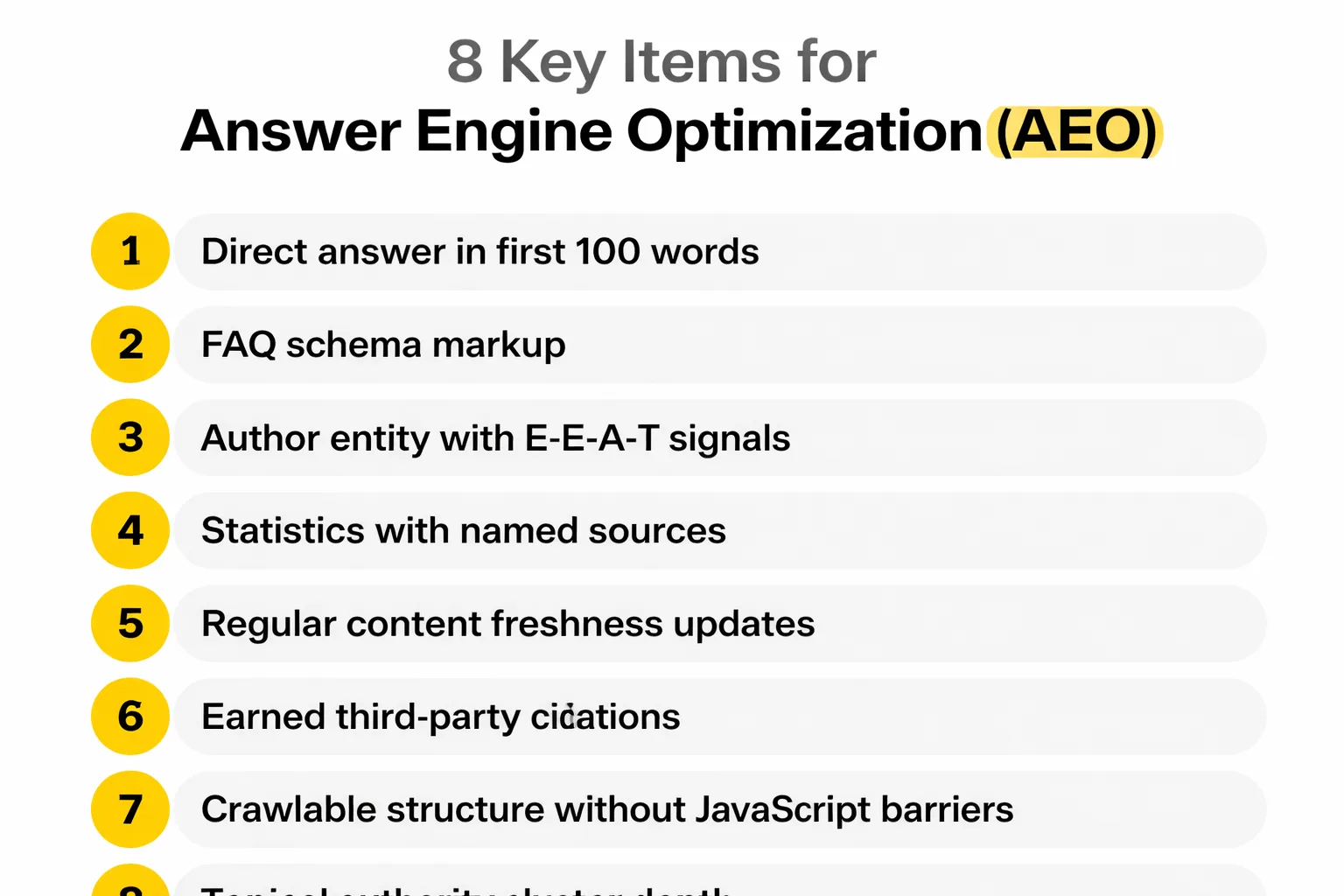
The arXiv GEO paper provides the most rigorous framework I've found for understanding what actually moves citation rates in generative engines. The researchers found that statistics and quotations increased citation rates, that authoritative sourcing within the content itself was a positive signal, and that fluency improvements alone had limited effect. That last finding surprised me when I first read it. It means polishing prose doesn't move the needle the way adding citable data does.
Structured data matters, but not uniformly. FAQ schema and HowTo schema give retrieval systems explicit signals about what questions a page answers. Article schema with author entity markup supports E-E-A-T signals that some LLMs weight in source selection. The practical implication: if you're publishing content without schema markup, you're leaving a legibility signal on the table.
Content freshness is a real variable, particularly for Perplexity. Pages with recent publish or update dates get preferential treatment for queries where recency matters. This is a strong argument for maintaining a regular publishing cadence rather than treating content as a one-time asset. The pattern I keep seeing is that brands with stale content clusters. Posts from 2022 that haven't been touched. Are getting displaced in AI citations even when their domain authority is solid.
The earned media finding from the GEO research deserves its own emphasis. Somewhere between 80-90% of LLM responses appear to draw from organically earned placements rather than brand-owned content. I've stopped commissioning outreach campaigns where the brief is "get us mentioned anywhere." The failure mode I kept seeing was high mention volume with zero compounding effect. Editorially earned mentions. Where a journalist or editor chose to include you because you were genuinely the right reference. Behave differently in how LLMs weight them. They tend to appear in pieces with real topical depth, which means the semantic neighborhood around the mention is doing work. Manufactured mentions, by contrast, often land in thin content where there's no surrounding signal to reinforce authority.
For Gemini visibility specifically, Google's own LLM pulls heavily from sources that already rank well in traditional Google Search. Which creates a compounding dynamic where strong Google SEO still feeds AI citation, at least within Google's ecosystem. That's not true for Perplexity or ChatGPT Search, which are genuinely independent.
What This Means for Your Content and AEO Strategy
Answer engine optimization (AEO) is the practice of structuring content so AI engines can extract, cite, and surface it accurately. It overlaps with SEO but it's not the same discipline.
Here's the tension I keep running into: the tactics actually getting content cited in AI engines are pulling in the opposite direction from what Google's Helpful Content System rewards. Practitioners optimizing for Perplexity and ChatGPT citations are gravitating toward tight citation blocks and direct, opinionated answers. That format works for generative engines. It does not work the same way for HCG signals, which still lean toward demonstrated depth and topical authority. I've watched teams pick a lane and quietly lose ground in the other channel. Lily Ray called 2025 the most volatile year in 15 years of SEO practice, and the volatility hasn't resolved.
So here's the practical framework I'm working from right now.
Signals that transfer across platforms: Crawlability, structured data (especially FAQ and Article schema), content freshness, and named author entities with verifiable credentials. These work for Google, Bing, Perplexity, and Copilot. Invest in them unconditionally.
Signals that require engine-specific tactics: Citation density (Perplexity rewards it; Google may penalize over-optimization), conversational framing (helps AI extraction; neutral for traditional search), and third-party earned mentions (critical for LLM citation; secondary for Google rankings). Treat these as separate workstreams.
For topical authority specifically: AI engines appear to weight depth of coverage within a topic cluster. A site with 40 articles on a narrow topic will outperform a site with one comprehensive guide, all else equal. This is consistent with what I've seen in Meev's citation tracking data across AI search surfaces — brands that dominate a topic cluster in AI citations tend to have published consistently on that topic, not just published one definitive piece.
On the Grok visibility side, xAI's engine pulls from X (formerly Twitter) data in ways that other LLMs don't, which means social presence and real-time commentary on your topic category can influence citation patterns there in ways that wouldn't move Perplexity at all. Different surfaces, different inputs.
The monitoring question is genuinely hard. You can't manually check every AI engine for every query your brand should appear in. The pattern I keep seeing among teams that are actually ahead of this: they've built systematic tracking rather than spot-checking. Knowing where you appear, where you don't, and which competitors are filling the gaps you're missing. That's the operational foundation everything else builds on. Meev tracks brand mentions and citation patterns across every major AI search surface with daily refresh on SERP-driven surfaces, which is the kind of systematic coverage that makes a real difference when you're trying to close specific citation gaps rather than just hoping your content gets picked up.
For AI citation outreach, the workflow that's working is: identify the publishers that AI engines actually cite for your topic category, find verified contacts at those publishers, and pitch with genuine editorial value. Not "please mention our brand" — but "here's a data point or perspective that would strengthen the piece you're already writing on this topic." Slower than spray-and-pray. The citations actually hold.
The Webis 2024 study analyzed 7,400 product review queries across Google and Bing and found meaningful differences in how each engine surfaces and weights review content. For brands in categories where product reviews drive purchase decisions, that's not an academic finding. It's a signal that the same content can perform very differently depending on which engine your customer uses.
One practical note on the multi-engine reality: if you're a solo founder or small team, you cannot optimize for every surface simultaneously with the same depth. The prioritization I'd suggest: start with the surfaces where your audience actually spends time, track your current citation rate there, and close the biggest gaps first. A 0% citation rate on Perplexity for your core topic is a more urgent problem than a 2% rate on Brave. Fix the zeros before you optimize the marginals.
Frequently Asked Questions
Does ranking on Google automatically mean I'll appear in Perplexity or ChatGPT Search?
Not automatically, no. Perplexity runs its own real-time retrieval and weights sources based on its own signals. Domain authority, content freshness, semantic density, and earned third-party citations. A page that ranks #1 on Google can be invisible in Perplexity if it lacks structured data, clear direct answers, or third-party references. The overlap is meaningful but not guaranteed. Treat AI citation as a separate channel that requires its own optimization layer.
How do I know which AI engines are actually sending traffic to my site?
Check your analytics referral data for traffic from perplexity.ai, chat.openai.com, and bing.com/chat. These will show up as referral sources if users click through from citations. For engines that don't surface clickable citations (like some ChatGPT responses), direct traffic increases can be a proxy signal. Systematic AI visibility tracking platforms give you citation presence data even when no click occurs. Which is increasingly important as zero-click AI answers become the norm.
Is DuckDuckGo worth optimizing for separately?
Not separately. DuckDuckGo's results are powered by Bing's index, so Bing optimization covers it. The more interesting DuckDuckGo signal is its AI feature (DuckAssist), which also runs on Bing and Anthropic's Claude. If you rank on Bing and have content structured for AI extraction, you're covered. No separate workflow needed.
What's the fastest way to improve Perplexity citation rates?
Three things move the needle fastest: add statistics with named sources directly in the body of your content (the arXiv GEO research found this increases citation rates), earn third-party editorial mentions in substantive pieces that Perplexity already cites for your topic, and ensure your pages are crawlable with clean structure and FAQ schema — because Googlebot search behaviors directly shape your AI crawl budget. Fluency improvements alone don't move citation rates. The GEO research was explicit about this.
Should I be tracking Grok and DeepSeek, or just focus on Perplexity and ChatGPT?
Depends on your audience. If you're targeting technical users, international audiences, or categories where xAI's Grok has traction, yes. Grok pulls from X data in ways other LLMs don't, so brands with active social commentary in their topic area have a different citation profile there. DeepSeek matters particularly for brands with international reach. The principle is: track the surfaces your audience uses, not just the ones with the highest aggregate traffic share.
About the Author
Judy Zhou, Head of Content Strategy
Judy Zhou leads content strategy at Meev, where she oversees AI-driven content research and publishing for hundreds of brands. With a background in SEO and editorial operations, she focuses on building content systems that rank on Google, get cited by AI search engines, and drive measurable business results.
Track your citation presence across every major AI search surface — Perplexity, ChatGPT, Gemini, Grok, and more — and close the gaps before your competitors do.