Free tool · No signup

Free Blog Keyword Generator

Describe your niche and get 30 keyword ideas grouped by search intent — informational, commercial, comparison, and long-tail — each with an AI-estimated difficulty and the content format most likely to win it. Difficulty labels are editorial estimates, not search-volume data.

Loading…

Free · 10 AI runs per day · No signup required

How it works

Step 1

Describe your niche

Your topic or market, plus an optional target audience to sharpen the angles.

Step 2

AI generates 30 keywords

Realistic phrases people actually search — a mix of head terms and specific long-tail queries.

Step 3

Grouped by intent

Informational, commercial, comparison, and long-tail — each group is a different stage of the buyer journey.

Step 4

Pick your battles

Each keyword carries an estimated difficulty and a winning format, so you know what to write first.

Why it matters

Intent decides the format before you write a word.

A keyword isn't just a phrase — it's a request for a specific kind of page. Informational queries want guides and definitions, commercial queries want product-aware content, comparison queries want honest versus pages, and long-tail queries want precise answers. Matching the format to the intent is the difference between ranking and being skipped, in both classic search and AI answers.

Long-tail keywords are how small sites win.

New and small sites rarely beat established domains on head terms — but specific, multi-word queries have less competition and clearer intent. A cluster of long-tail articles that each win their narrow query builds the topical authority that eventually lets you compete on the broader terms too. Start narrow, expand upward.

Difficulty here is an editorial estimate — treat it that way.

The Low / Medium / High labels are AI judgments of how hard ranking would be for a small site, based on how specific and competitive each phrase looks — they are not pulled from a search-volume database. Use them to triage a list of 30 into a writing order, then validate your top picks in a keyword tool before betting a quarter's content calendar on them.

With Meev

Meev turns keyword lists into a publishing engine.

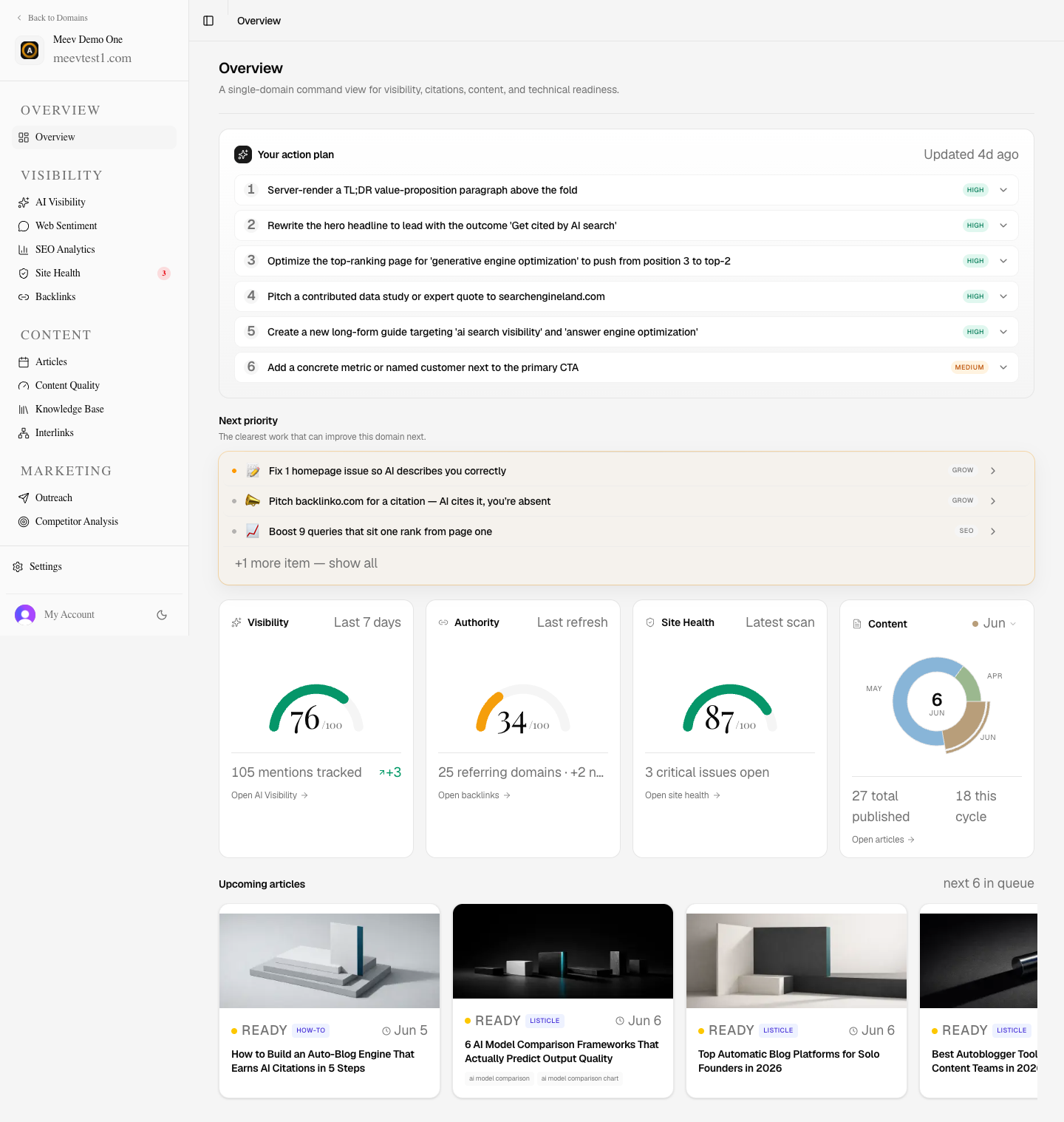
This tool gives you 30 ideas. Meev runs topic discovery against your actual domain every week, scores what you can realistically win, and writes quality-gated articles that cover the winners — keywords to published posts, on autopilot.

  • Topic planning weighs real search demand against your domain's strength
  • Articles ship with internal links, schema, and AI-extraction structure built in
  • Visibility tracking shows which topics earn citations across every major AI search surface

Frequently asked

Where do the difficulty labels come from?

They're AI editorial estimates of how hard a small or new site would find it to rank for each phrase — specific long-tail queries are marked Low, broad head terms High. They are not search-volume or competition data from a keyword database. Use them to prioritize the list, then validate your top picks in a dedicated keyword tool before investing heavily.

What do the four intent groups mean?

Informational keywords are how-and-what questions best served by guides. Commercial keywords carry buying intent — best-of lists, pricing, and product-aware content win them. Comparison keywords pit options against each other and want honest versus pages. Long-tail keywords are highly specific multi-word queries with low competition and very clear intent.

I have a new site — which keywords should I start with?

Start with the Long-tail group, plus any Low-difficulty keywords elsewhere. Specific queries have fewer established pages competing, so a well-structured article can rank in weeks instead of months. Winning a cluster of narrow queries builds the topical authority you need before attacking Medium and High terms.

How many keywords should one article target?

One primary keyword per article, plus three to five closely related variations woven into subheadings and the FAQ. Don't force keywords from different intent groups into one piece — an informational guide and a comparison page serve different searches and deserve separate URLs.

How do I turn this list into a content calendar?

Group the keywords by intent and difficulty, then sequence: long-tail and Low-difficulty articles first for early wins, commercial and comparison pieces next as your authority grows, head terms last. Aim for a steady cadence — one to three articles a week beats a burst followed by silence — and interlink the pieces within each topic cluster.

How many free runs do I get?

Free AI tool runs are shared across all Meev tools and reset daily. Re-running a niche you've already generated is served from cache and doesn't count against your quota.

Stop fixing pages one at a time.

Meev tracks your visibility across every major AI search surface and publishes quality-gated content that earns citations — automatically.

Card required, no charge until day 8. Cancel anytime.

More free tools

View all →