Platform · Perplexity
Perplexity citation tracking, answer-by-answer.
Perplexity ships every answer with numbered citations. See exactly which queries cite your domain, where you rank in the citation list, and what your competitors are getting cited for that you're missing.
7-day free trial · cancel anytime
Live dashboard
Perplexity citations become prompt-level visibility data.
See citation rank, missing prompts, competitor domains, and trend movement in the same workspace used to plan content and outreach.
What Perplexity citation tracking measures
Perplexity is the most measurable AI search engine. Every answer is generated from cited URLs, listed numerically at the end. So for any query, the visibility question reduces to: was your domain in the citation list, and where did it rank?
That makes Perplexity a natural starting point for AI visibility analytics. The other engines (ChatGPT, Claude, Gemini) often mention brands inline without a clean citation — Perplexity always exposes the source list. If you can't see your domain in Perplexity citations for queries your buyers ask, that's a measurable gap with a clear remediation path.
The metric to track:citation share — the percentage of queries in your topic cluster where your domain appears in Perplexity's citation list. A 30% citation share on the top 50 buyer queries is the difference between "Perplexity recommends us sometimes" and "Perplexity is a real channel for us."
How Perplexity picks citations
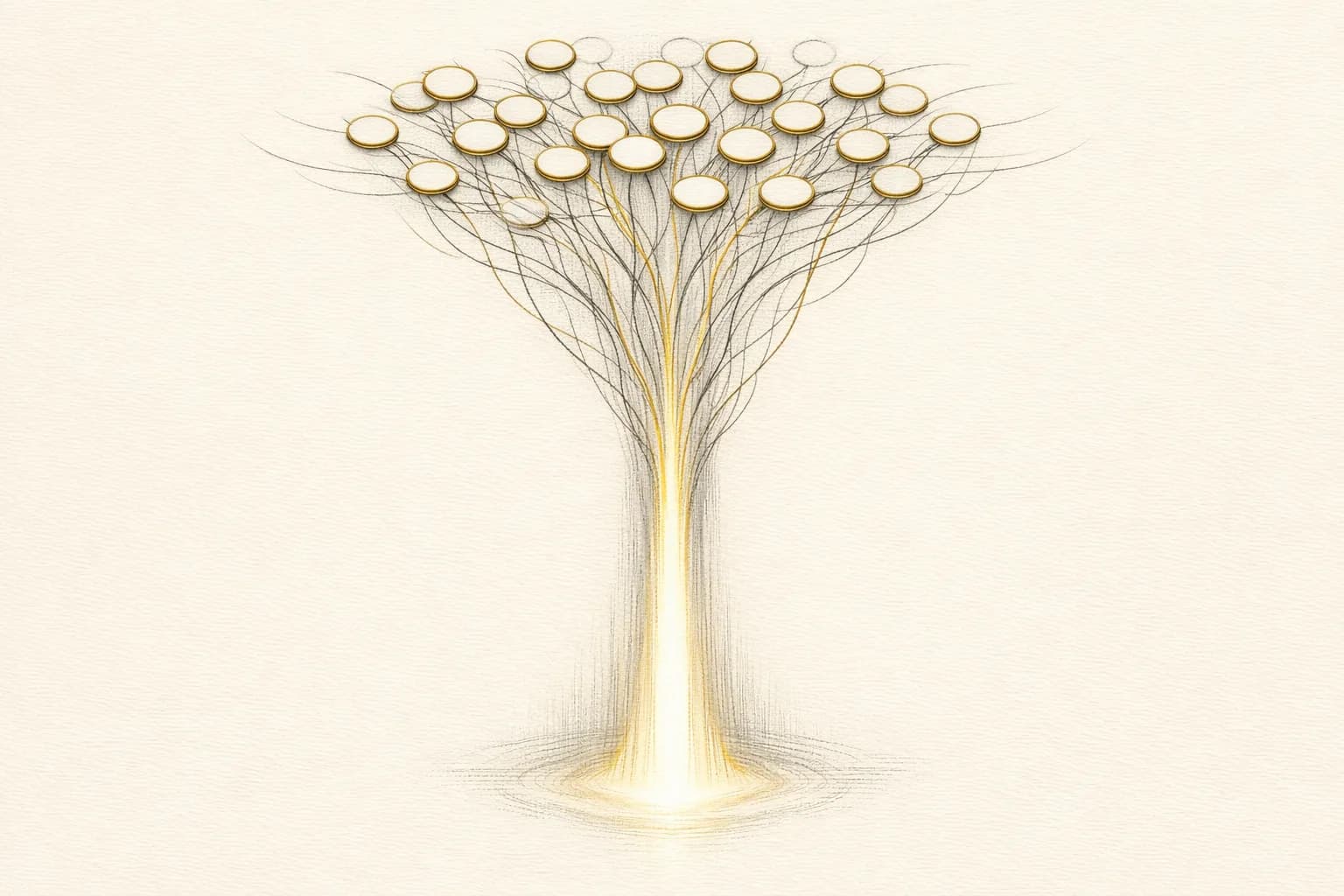
Perplexity is a search-first system. For each query it:
- Issues web searches across one or more search backends to gather candidate URLs.
- Retrieves and reads the top candidates — pulling actual page content, not just metadata.
- Reranks based on relevance, recency, answer-shape (does the page directly answer the question?), and authority signals.
- Synthesizes the answer from the reranked sources, citing each contributing URL inline.
Practical implications: pages that already rank well on Google for a query usually appear in Perplexity's candidate pool. Pages that answer the question in the first 200 words preferentially survive the reranker. Freshness matters more than for Google — Perplexity skews toward recent sources for time-sensitive queries.
How to track Perplexity citations
Manually: open Perplexity, run your queries, screenshot the citation list. The 20-40% run-to-run variance makes this approach noisy — you can convince yourself you're cited or not based on a single sample.
With Meev: each prompt runs weekly and we record:
- Whether your domain appeared in the citation list.
- The citation rank (cited 1st? 5th? 10th?).
- The full competitor citation set for the same query.
- The answer paragraph each citation supports.
- Multi-week trend so you can separate signal from noise.
Output: per-prompt citation share for Perplexity, plus a ranked list of citation gaps — queries where competitors are cited and you're not. That's the input to content strategy: each gap is a topic where your retrieval surface needs work.
What moves Perplexity citation share
- Direct-answer structure. Lead with the answer. The first 200 words should resolve the user's question. Reserve the deep context for later in the piece. Perplexity's reranker rewards this shape; traditional "intro, hook, body" SEO writing underperforms.
- Google ranking baseline. Pages that don't rank on Google rarely make Perplexity's candidate pool. Standard SEO is the table stakes.
- Recency of update. Re-publishing or updating articles meaningfully (not just bumping the date) helps for time-sensitive queries.
- Citation-rich content. Counter-intuitively, your own content citing other authoritative sources tends to outperform unsourced content of the same length. Perplexity's reranker likes well-grounded pages.
- Crawler permissions. Allow
PerplexityBotin your robots.txt. Surprisingly common to see this blocked default.
That list is the short version. For the full walkthrough, see how to get cited by Perplexity, which covers the same five steps with worked examples.
Common mistakes
One-shot citation checking. 20-40% variance per run. You need averaged tracking, not a single sample.
Burying the answer. The 800-word intro that "sets context" before the answer is a Perplexity-killer. Lead with the answer.
Ignoring competitor Perplexity Pages. If a competitor publishes a Perplexity Page on your topic, it becomes a cited source you have to displace. Track this.
Treating Perplexity as ChatGPT. Different mechanics. ChatGPT can cite from training; Perplexity always retrieves. Optimization tactics differ.
Perplexity vs ChatGPT, Claude, and AI Overviews — when to focus where
Different engines reward different content shapes, and tracking each in isolation gives partial signal. Where Perplexity slots into a serious AI visibility strategy:
- Perplexity is the cleanest citation tracker because every answer ships with a numbered source list. Best starting point for diagnostic visibility — you can see exactly which domains are cited, in what order, on which queries. Most measurable surface in the AI search stack.
- ChatGPT mixes parametric knowledge with retrieval and often mentions brands inline without explicit citation. Track both for brands where in-line mention quality matters as much as cited link share.
- Claude is grounded and conservative — it tends to cite named third-party authorities over self-promotional sources. Particularly important for technical brands evaluated through Claude Code.
- Google AI Overviews are tied to your organic Google ranking. If your category triggers Overviews above the SERP fold, that surface dominates the zero-click experience.
The right move: track all four in parallel. Lead diagnostic work with Perplexity since the citation data is the cleanest, then use the deltas — "cited on Perplexity but not ChatGPT", "cited on Google AI Overview but not Claude" — to figure out which retrieval surface needs work and why.
Frequently asked
What is Perplexity citation tracking?
Perplexity citation tracking is the practice of monitoring whether Perplexity's answers link to your domain when users search topics in your category. Unlike ChatGPT or Claude, every Perplexity answer ships with numbered citations to specific URLs — so for Perplexity, citations are the visibility unit. The question isn't "did the answer mention us" but "is our domain in the citation list, and where in the ranking?"
How does Perplexity select which sources to cite?
Perplexity is search-first by design. For each query, it issues web searches, retrieves the top results, reads the content, and synthesizes a cited answer. The retrieval ranks pages on a mix of relevance, recency, authority signals (similar to Google's), and how well each page actually answers the user's question. Pages that appear in Google's top results for a query usually have high probability of being cited by Perplexity for the same query — but Perplexity's reranker also rewards content density and direct answer-shape that Google's ranking doesn't always reward.
Is Perplexity SEO the same as Google SEO?
Overlapping but not identical. Both reward authoritative, well-structured content. The differences: Perplexity weights direct answer-shape heavily — pages that answer the question in the first 200 words rank better than pages that bury the answer; freshness matters more (Perplexity is biased toward recent sources); and citation diversity matters — being one of the same 20 sources Perplexity always pulls from beats being a single high-ranked Google result.
Why do I see different citations every time I run the same Perplexity query?
Perplexity's retrieval re-runs each time and the model picks slightly different sources from the candidate pool. Variance of 20-40% across runs is normal. This is why one-shot manual checking is unreliable for measuring visibility — you need multiple runs averaged over time to see the underlying citation pattern.
Can I track Perplexity citations automatically?
Yes — Meev runs your prompt list against Perplexity weekly and records (1) whether your domain appears in the citation list, (2) the citation rank position, (3) which competitor domains were cited alongside or instead of you, and (4) the answer text surrounding any citation. Same prompts run against ChatGPT, Claude, Gemini, Grok, DeepSeek, Google AI Overviews, and Google AI Mode in parallel.
How can I track sources mentioned by Perplexity?
Fix a list of 10 to 20 buyer questions, run them against Perplexity on a schedule, and record the full source list each answer returns rather than only whether you appear. That gives you three things a manual spot-check cannot: which domains Perplexity pulls from repeatedly in your category, where you sit in the citation order when you do appear, and which competitor took the slot when you do not. Meev runs this weekly and stores the answer text alongside every cited URL, so you can read why a source was chosen instead of guessing.
How do I see mentions in Perplexity for queries about my industry?
Start from the questions your buyers actually ask rather than your keyword list, because Perplexity answers conversational phrasings that keyword tools do not report. Run each one, capture the cited sources, and group the queries where you are absent. The pattern that usually emerges is a small set of publisher domains cited across most answers in a category. Those are the pages worth pursuing, and Meev ranks them as citation outreach targets.
Does Perplexity Pages affect my visibility?
Yes — Perplexity Pages (their published research format) gets indexed and surfaces in regular Perplexity answers. If your competitor publishes a Perplexity Page on a topic in your category, it can become a cited source on queries you'd otherwise win. Worth tracking what your competitors publish there.
How long does it take to start getting cited by Perplexity?
Perplexity re-crawls actively and reflects new content within days for fresh queries. So a well-structured page targeting an under-covered query can land in Perplexity's citation pool within a week — much faster than waiting for Google to rank you. The harder part is winning citations on contested queries where Perplexity already has a stable set of sources it pulls from.
Track every other AI surface too
- ChatGPT visibility tracking — how OpenAI's flagship cites differently from Perplexity's pure-citation model.
- Claude visibility tracking — Anthropic's grounding-first behavior, including Claude Code.
- Gemini visibility tracking — the standalone Gemini app + Workspace integration; entity-graph weighted.
- Grok visibility tracking — xAI's realtime-first model with first-party X data access.
- DeepSeek visibility tracking — the Chinese open-weights model with a code-and-math-heavy corpus.
- Google AI Overviews tracking — the auto-shown snapshot above the SERP for ~25-48% of queries.
- Google AI Mode tracking — the conversational deep-search surface inside Search; higher citation density than AIO.
- Meev Academy — tutorials on AEO, GEO, and earning citations across every major AI search surface.

See your Perplexity citations
Paste your domain. Save 3 prompts. We'll show you which queries cite you on Perplexity, where you rank in the citation list, and what to publish first.
7-day Starter trial · cancel anytime