Platform · Gemini
Gemini visibility, measured properly.
See exactly which queries Gemini mentions your brand for — across the standalone chat app, Workspace, and the API. Different surface from AI Overviews with different ranking inputs. Same prompts run weekly across every major AI search surface.
7-day free trial · cancel anytime
Live dashboard
Gemini visibility sits beside every other answer engine.
Use the same prompt set to compare Gemini-app mentions, citation gaps, and competitor presence against ChatGPT, Claude, Perplexity, Grok, DeepSeek, AI Overviews, and AI Mode.
What Gemini visibility actually means
Gemini visibility is the percentage of relevant queries where Google's Gemini names your brand, links to your domain, or recommends your product. Either you're mentioned in the synthesis, or you're not.
Buyers conflate two things constantly: Gemini-the-model and Gemini-the-app. Gemini is the model family that powers every Google AI product — Search's AI Overviews, AI Mode, Workspace, the standalone app at gemini.google.com, the developer API. This page is about visibility in the Gemini-app surface specifically. AI Overviews has its own page; AI Mode has its own page too. The model is the same; the ranking inputs and citation behavior differ across surfaces.
Why this matters now: Gemini reportedly hit ~750M users in March 2026 and runs on 1B+ Android devices. Gemini in Google Workspace is bundled into 3B+ Workspace seats — every Doc draft and Gmail summary is a potential brand-mention surface. If you sell into the Google ecosystem and you're only tracking ChatGPT, you're missing where most enterprise users actually ask AI questions.
How Gemini decides what to cite
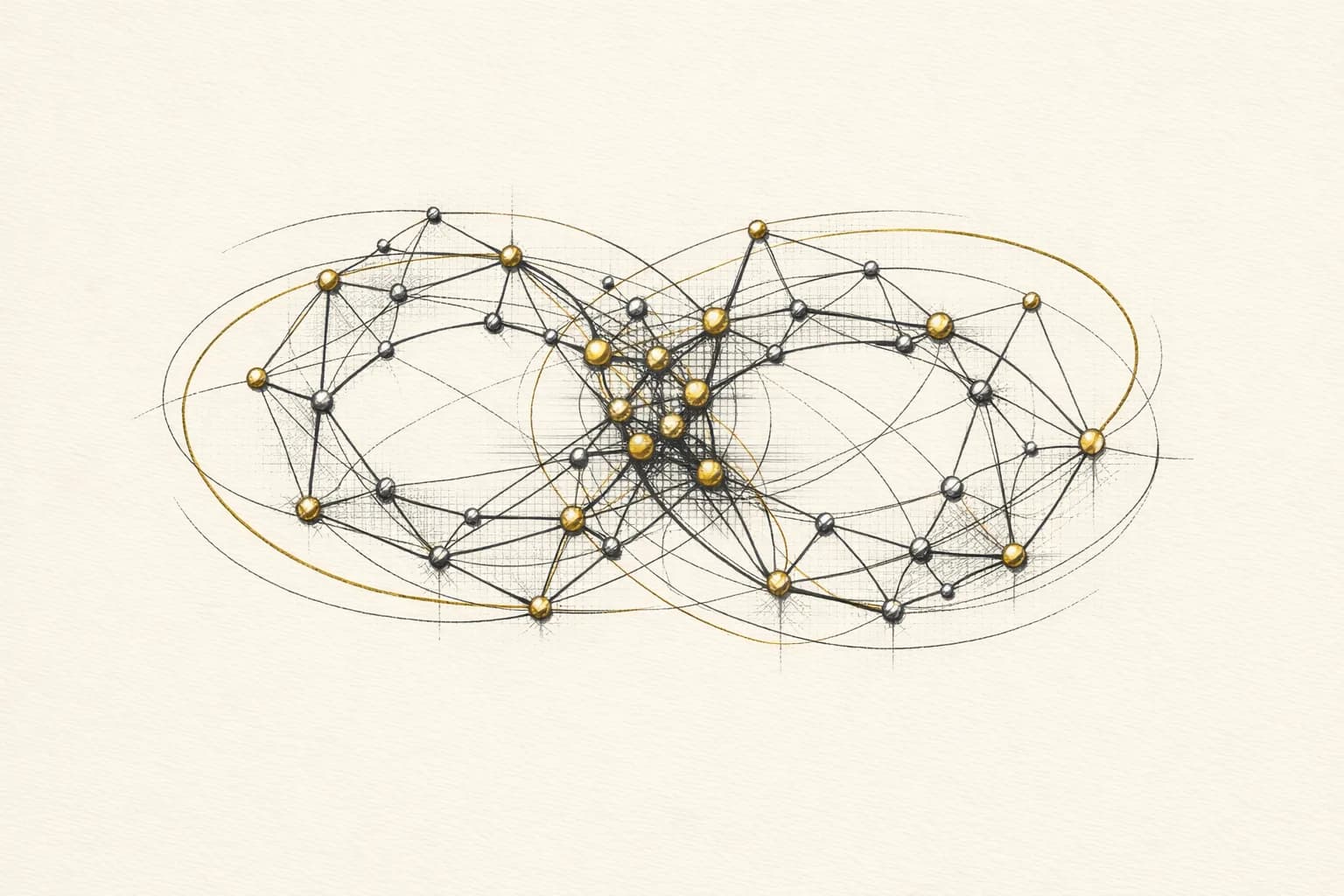
The Gemini app pulls from three layers, each shaping visibility differently:
- Parametric knowledge. Trained into the model from Google's web crawl — the largest in existence. This is a structural Gemini advantage at the pre-training layer. Updates only when DeepMind retrains. Gemini 2.5 Pro's reported training cutoff is around January 2025; Gemini 3 (Nov 2025) extends further but Google hasn't published an authoritative single date.
- Grounding with Google Search. The model decides per-prompt whether to fire a search tool. When grounding fires, Gemini reads URLs from Google's live index and surfaces a Sources panel with the cited domains. This is the fastest visibility lever — freshly indexed content can appear within hours.
- Knowledge Graph anchoring. Gemini weighs entity strength heavily. Brands with
sameAslinks to Wikipedia, Wikidata, LinkedIn, Crunchbase, and authoritative knowledge bases get treated as "real" entities and recommended more often. Brands with weak entity graphs get filtered.
Gemini also has a "Double-check responses" feature in the consumer app that runs a follow-up Google Search per sentence and color-codes claims green (corroborated), orange (contradicted/no support), or no-highlight (subjective). Brands that want to land green-highlighted in Double-check need claims that map to authoritative third-party corroboration.
How to track Gemini visibility
Manually: open gemini.google.com, type your queries, log mentions, check the Sources panel, repeat next week. Same brittle workflow as manual ChatGPT tracking — variance is high, model updates change behavior, competitor visibility is invisible, and you can't separate Gemini-app from AI Overviews behavior on overlapping queries.
With Meev: save your prompt list once. We record per Gemini run:
- Whether your brand was mentioned in the answer.
- The cited domains from the Sources panel.
- Surrounding sentence context for any mention.
- Multi-week trend so you can separate signal from variance.
- Diff against the prior run when something shifts.
Output: a Gemini-app-specific visibility score per prompt, tracked separately from AI Overviews and AI Mode (same model, different surfaces). The same prompt list runs in parallel against every other major AI search surface, so you can see exactly where Gemini's pattern diverges from the others — particularly for queries where Knowledge Graph anchoring matters more than classical SERP rank.
What actually moves Gemini visibility
- Knowledge Graph anchoring. The single biggest Gemini-specific lever. Brands with Wikipedia entries, Wikidata records, and
sameAslinks across LinkedIn, Crunchbase, GitHub, and authoritative directories get recommended more often than brands with thin entity footprints — even when the latter rank well in classical Search. - Schema.org structured data. Article, FAQPage, HowTo, Product, Organization, Author schemas help Gemini map your content to entities. Per Google's structured-data docs, prefer JSON-LD and keep markup in lockstep with visible content.
- E-E-A-T signals. Same authoritativeness signals Google uses for Search rankings flow into what Gemini treats as trustworthy. Author bylines with credentials, original research, named expertise, and citations to high-trust sources carry weight.
- Multimodal coverage. Gemini 3 Pro is positioned as best-in-class for multimodal understanding. Brand presence in image and video queries (product shots, screenshot analysis, YouTube descriptions) is a Gemini-specific lever that doesn't apply to text-only LLMs.
- Long-form authoritative content. Gemini's 1M-token context window enables Deep Research to ingest entire competitive landscapes in one pass. Brands publishing long-form, well-cited content get pulled into Deep Research synthesis where shorter marketing pages don't.
Common mistakes
Conflating Gemini-the-app with AI Overviews. Both are Gemini-powered, but ranking inputs and citation behavior differ. Gemini-app weights entity-graph anchoring; AI Overviews leans more on classical search rank. Strategies that win one often miss the other — track both separately or you're measuring blind.
Blocking Google-Extended thinking it saves bandwidth. It doesn't reduce crawl load (no separate fetcher), and removes you from grounding citations while leaving summarization intact. Net result: you lose the citation link (and traffic) but the model can still describe your product without linking. Most brands shouldn't block.
Ignoring Workspace as a citation surface. Gemini in Docs/Gmail recommends links from the open web inside enterprise drafts. Brands without strong Knowledge-Graph entity status miss this surface entirely — and Workspace is where your enterprise buyers actually live.
No sameAs / Wikidata linkage. Gemini weighs entity-graph anchoring heavily. Sites with no external entity verification lose to competitors that have it. Cheap fix: claim/edit Wikidata, add sameAs links in your Organization schema, get cited in Wikipedia where editorially defensible.
Optimizing only for text. Gemini's multimodal lead means image/video presence matters — particularly for product, recipe, location, or visually-anchored queries. YouTube descriptions, alt text, image schemas all feed Gemini differently than they feed text-only LLMs.
Frequently asked
What is Gemini AI visibility tracking?
Gemini AI visibility tracking is the practice of monitoring whether Google's Gemini — across the standalone chat app at gemini.google.com, the Workspace integration in Docs/Gmail/Drive, the mobile app, and the developer API — mentions your brand or links to your domain when users ask questions in your category. The unit of measurement is inclusion in Gemini's generated answer, not position on a results page.
Is Gemini the same as AI Overviews?
Same model family, different products. Gemini is the model that powers everything Google AI does. The Gemini app at gemini.google.com is a standalone chat assistant. AI Overviews are the auto-shown snapshots above regular Google Search results. Both run on Gemini, but they apply different ranking inputs and citation behavior — the Gemini app weights entity strength and Knowledge Graph anchoring; AI Overviews lean more on classical search rank. SEO tactics that win AI Overviews often miss Gemini-app citations and vice versa.
How does Gemini decide what to cite?
The Gemini app uses Grounding with Google Search — the model decides per-prompt whether to fire a search tool. When grounding fires, the response surfaces a collapsible Sources panel rendered after generation completes. Programmatic responses via the Gemini API return groundingChunks (URI + title for each web source) and groundingSupports (text-span → source-index mappings). For factual or current-events queries, grounding usually fires; for conversational or creative prompts, it often doesn't.
Does Google-Extended in robots.txt control Gemini visibility?
Partially. Google-Extended is the user-agent token in robots.txt that controls whether content is used to train future Gemini models AND used to ground live Gemini answers. Blocking Google-Extended does NOT affect classical Search rankings (Google explicitly confirmed in April 2025 it isn't a ranking signal). But it does reduce Gemini-app citations. Net trade: lose the citation link (and potential traffic from Gemini) while content may still be summarized from already-indexed data. Most brands shouldn't block.
How is Gemini visibility different from ChatGPT or Claude?
Three structural differences: (1) Strongest search grounding of any LLM — Gemini has direct first-party access to Google's index, not a third-party search API. (2) Largest integration surface — Workspace (3B+ users), Pixel, Android, Chrome — no other LLM has comparable distribution outside its own chat app. (3) Multimodal lead — best-in-class image/video understanding, so brand presence in image-grounded queries matters in ways it doesn't on text-only LLMs.
Does Workspace Gemini count as Gemini visibility?
Yes — and it's increasingly important. Gemini in Docs, Gmail, Drive, and Sheets surfaces brand recommendations directly inside enterprise drafts. Gemini in Workspace queries can be configured by admins, and Workspace data isn't used to train consumer models by default, but the recommendations Gemini surfaces inside Workspace draw from open-web entity-graph and grounding signals just like the consumer app.
Can I track Gemini visibility automatically?
Yes — Meev runs your prompt list against Gemini on a rolling cadence and records whether your brand was mentioned, the cited sources, and which competitors were cited alongside or instead of you. The same prompts run in parallel against ChatGPT, Claude, Perplexity, Grok, DeepSeek, Google AI Overviews, and Google AI Mode so you can see Gemini-specific patterns separately from your overall visibility score.
Related Google AI surfaces
- Google AI Overviews tracking — the auto-shown snapshot above the SERP. Same model, classical-rank-weighted citation pool.
- Google AI Mode tracking — the conversational deep-search experience inside Search. Higher citation density, multi-turn.
- ChatGPT visibility tracking — for comparison: how OpenAI's flagship cites differently.
- Claude AI visibility tracking — Anthropic's grounding-first behavior vs Gemini's entity-graph emphasis.
- Meev Academy — tutorials on AEO, GEO, and earning citations across every major AI search surface.
See your Gemini visibility
Paste your domain. Save 3 prompts. We'll show you which queries cite you on Gemini, where AI Overviews diverges from Gemini-app, and which entity-graph gaps to close first.
7-day Starter trial · cancel anytime