Free tool · No signup

Free XML Sitemap Generator

Enter your domain and we crawl up to 30 pages from your homepage, then generate a valid sitemap.xml — homepage first, duplicates and file links stripped — ready to download, upload, and submit to search engines.

Loading…

Free · Unlimited checks · No signup required

How it works

Step 1

Enter your domain

Just the domain — example.com. We start from your homepage.

Step 2

We crawl your site

Following internal links up to 2 levels deep and 30 pages, same site only — files, images, and duplicates skipped.

Step 3

Get valid XML

A clean urlset sitemap with your homepage first — copy it or download sitemap.xml directly.

Step 4

Upload and submit

Put it at your web root, reference it in robots.txt, and submit it in Search Console.

Why it matters

A sitemap is how engines find pages your navigation doesn't surface.

Crawlers discover pages by following links — and pages buried three clicks deep, orphaned by a redesign, or linked only from old posts get found late or never. A sitemap hands every engine the complete list of URLs you want indexed, so discovery doesn't depend on your internal linking being perfect.

Faster discovery means faster rankings — and faster AI citations.

A page can't rank or be cited until it's been crawled and indexed. Sites with a submitted sitemap get new and updated pages picked up significantly sooner, which matters most when you publish often: the gap between publishing and appearing in results — classic or AI-generated — is largely a discovery problem, and the sitemap is the cheapest way to close it.

A stale sitemap quietly erodes crawl trust.

When a sitemap lists deleted pages, redirected URLs, or misses everything published since last year, engines learn to trust it less — and your real pages compete for crawl attention with dead entries. The sitemap should be regenerated whenever your site changes, not treated as a one-time setup task.

With Meev

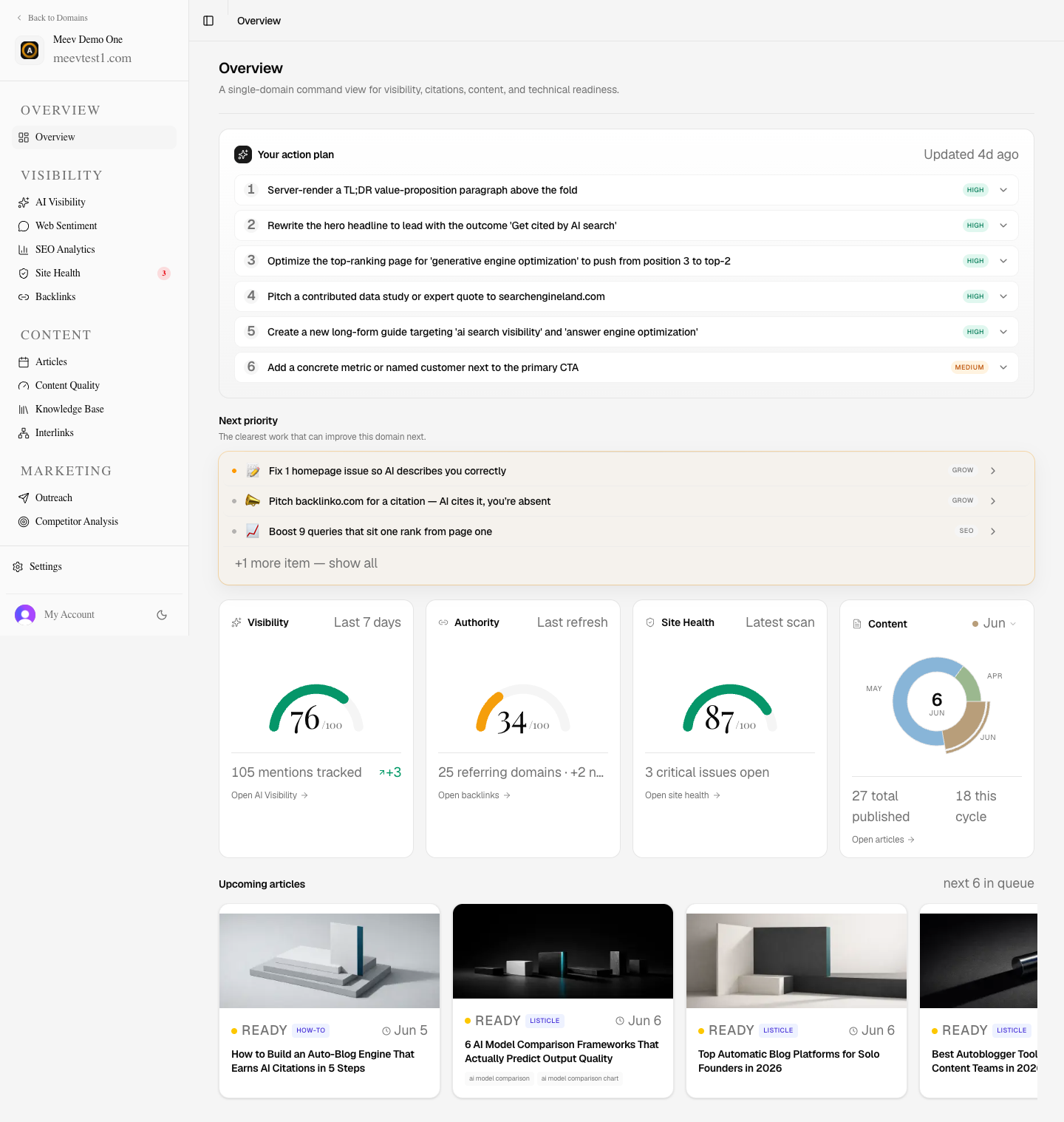
Meev keeps your sitemap current with every article it publishes.

A static sitemap is accurate for exactly as long as your site doesn't change. Meev publishes new content on schedule and keeps the sitemap in sync automatically — every new article is listed the moment it goes live, so engines discover it immediately.

  • Sitemap updates automatically with every published article — no regeneration step
  • Clean canonical URLs and metadata on every entry, so engines trust the file
  • Visibility tracking shows when new pages start appearing across search and AI engines

Frequently asked

What does a sitemap actually do?

A sitemap.xml is a machine-readable list of the URLs on your site you want indexed. Search and AI engines use it to discover pages without depending on internal links — especially new pages, deep pages, and anything your navigation doesn't reach. It doesn't boost rankings directly; it makes sure every page gets the chance to rank at all.

How many URLs can a sitemap contain?

Up to 50,000 URLs or 50MB uncompressed per file. Bigger sites split URLs across multiple sitemaps referenced by a sitemap index file. This tool covers the first 30 pages of your site — enough for most small sites, and a solid starting file for larger ones.

Do I need lastmod, changefreq, and priority fields?

Mostly no. Google has confirmed it ignores changefreq and priority entirely. lastmod is the one optional field engines do use — when it's accurate. If you can't keep lastmod truthful, a plain list of <loc> entries like this tool generates is better than fields engines learn to distrust.

Should my sitemap be static or generated dynamically?

Dynamic wins for any site that changes. A static file like this one is perfect for brochure sites that rarely change — but if you publish regularly, the sitemap should be generated by your CMS or platform so new pages appear automatically. A sitemap missing your newest content fails at exactly the job it exists for.

How do I submit my sitemap to search engines?

Two steps cover everything: add a 'Sitemap: https://yoursite.com/sitemap.xml' line to your robots.txt (every crawler reads it, including AI crawlers), and submit the URL once in Google Search Console under Indexing → Sitemaps — Bing Webmaster Tools too if you want Bing-powered surfaces. After that, engines re-fetch it on their own.

Why does my sitemap show fewer pages than my site has?

This tool follows internal links from your homepage, up to 2 levels deep and 30 pages. Pages it can miss: anything deeper than 2 clicks, pages with no internal links pointing at them, and pages behind login or scripts. If pages you expected are missing, that's worth knowing by itself — engines crawling by links will struggle to find them too.

Stop fixing pages one at a time.

Meev tracks your visibility across every major AI search surface and publishes quality-gated content that earns citations — automatically.

Card required, no charge until day 8. Cancel anytime.

More free tools

View all →